home > ARTICLE > Release > Wild agarwood trees are infested with insects that feed on them and secrete fragrance.
Wild agarwood trees are infested with insects that feed on them and secrete fragrance.

My agarwood trees have been growing in my home for over 20 years.
Originally, I had about 100 trees, each about the size of a one-yuan coin.
Observing their growth, the agarwood trees that don't produce dense resin have grown significantly and
are now over 15 centimeters in diameter.
Only a few of the resin-producing trees are short and have low vitality,
with a diameter of only about 6-8 centimeters.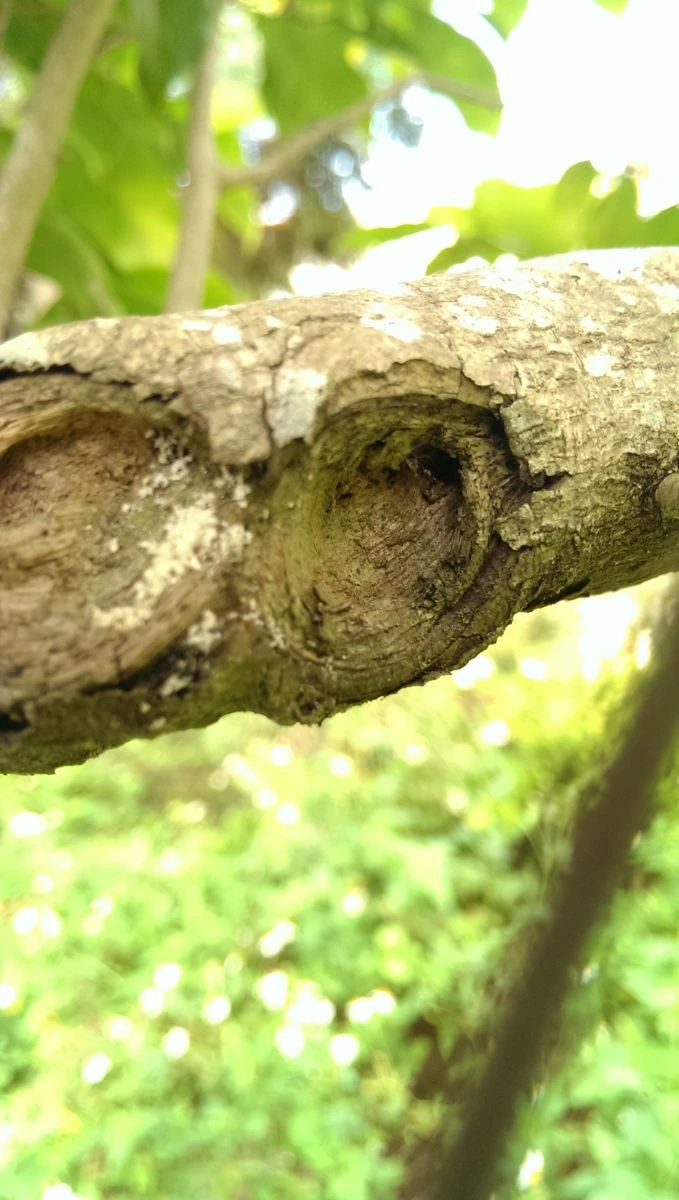
Originally, I had about 100 trees, each about the size of a one-yuan coin.
Observing their growth, the agarwood trees that don't produce dense resin have grown significantly and
are now over 15 centimeters in diameter.
Only a few of the resin-producing trees are short and have low vitality,
with a diameter of only about 6-8 centimeters.
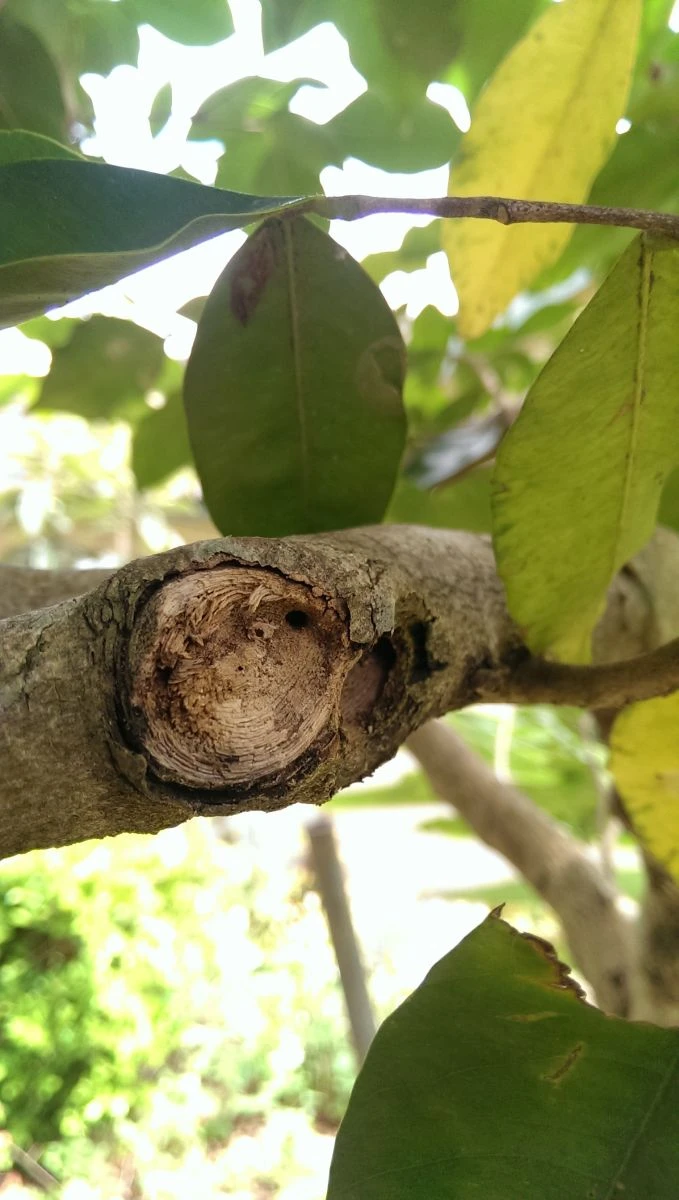
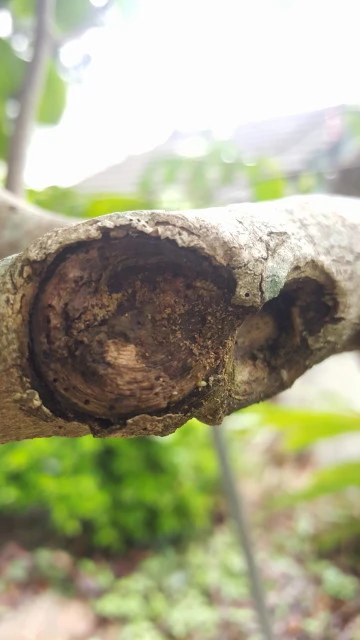
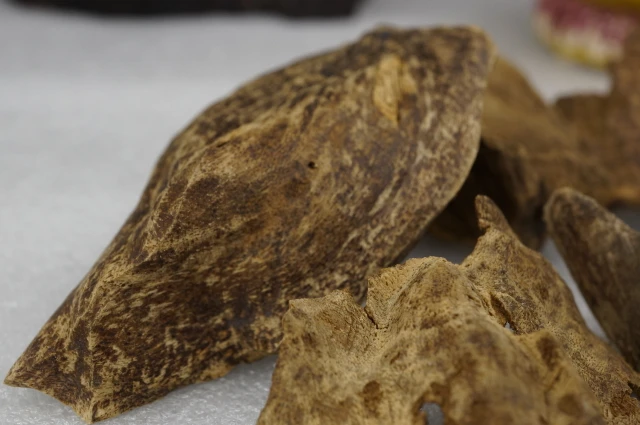
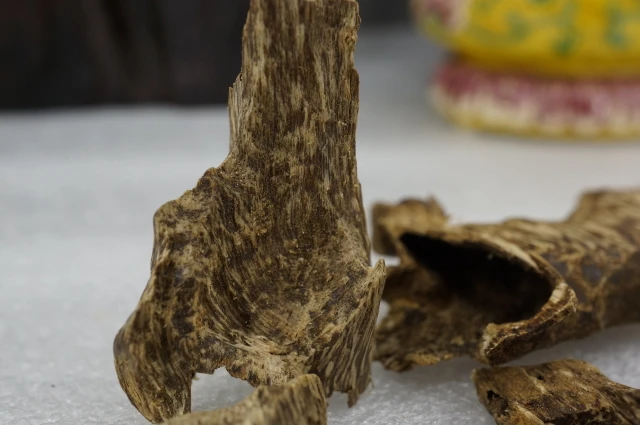
This photo shows the branches. The non-main trunk,
broken side branches, turned into snail shells.
broken side branches, turned into snail shells.
In the photo, some black oil has formed on the left side of the snail shell
. Breaking off a small piece reveals a faint agarwood fragrance.
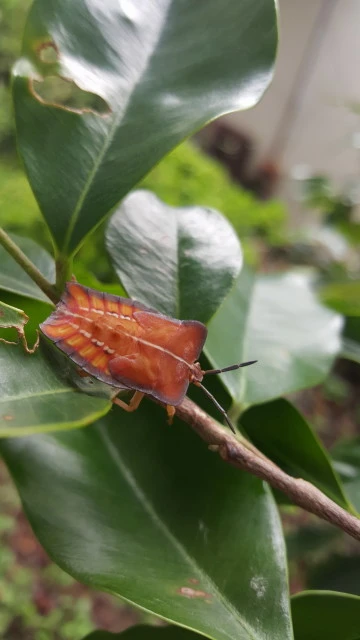
Close observation reveals many insects, ants, stink bugs, and longhorn beetles that seem to enjoy gnawing on the burrowing area.
. Breaking off a small piece reveals a faint agarwood fragrance.
Close observation reveals many insects, ants, stink bugs, and longhorn beetles that seem to enjoy gnawing on the burrowing area.
Lychee stink bugs are also present.
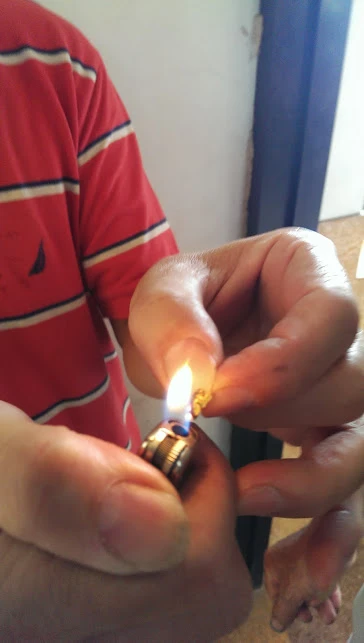
Shaving off a small piece from the eroded area
reveals a faint agarwood fragrance.
However, due to its short age and lack of soil
... The aroma is weak.
reveals a faint agarwood fragrance.
However, due to its short age and lack of soil
... The aroma is weak.
Most agarwood trees don't produce resin; they just grow naturally.
Broken branches burned in the wind have no agarwood fragrance,
only a foul woody smell .
Naturally resin-producing agarwood trees secrete a special liquid
that attracts insects, which then burrow and nest in it.
This is why you often see insect holes or snail shells in wild agarwood slices
– this is how it forms in the early stages. And it's only a small amount at first…
Also, if these slices are only in the early stages , then
the maturation time is so long,
and agarwood will definitely become increasingly scarce and expensive…
In the natural world,
Broken branches burned in the wind have no agarwood fragrance,
only a foul woody smell .
Naturally resin-producing agarwood trees secrete a special liquid
that attracts insects, which then burrow and nest in it.
This is why you often see insect holes or snail shells in wild agarwood slices
– this is how it forms in the early stages. And it's only a small amount at first…
Also, if these slices are only in the early stages , then
the maturation time is so long,
and agarwood will definitely become increasingly scarce and expensive…
In the natural world,
eventually, the agarwood tree will weaken and wither due to excessive secretion of defensive mechanisms, and
the sapwood will return to nature…
The secreted resin combines with minerals and bacteria underground
to form wild agarwood.
the sapwood will return to nature…
The secreted resin combines with minerals and bacteria underground
to form wild agarwood.


![[FOCUS News] The pursuit of](https://www.workband.com.tw/store_image/enincense/AT2_20260708134918_7733.webp)